I saw a tweet the other day that reminded me that the time has come.
To be honest, I had to go back to my TMC post to remember what my thing even was. I knew that there were two. It turns out that I've sort of been doing both!
The first was more engagement with the MTBoS community as a whole. In general, I have blogged more this year than ever before. I have been more active on Twitter than simply liking or retweeting. And, I spent time at the MTBoS booth at NCTM regional in Orlando (which was actually one of the highlights of the conference for me).
The second was about Desmos Activity Builder. Specifically, I wanted to create my own activities. I have yet to create an entire activity because I'm completely overwhelmed by having four preps. We've done a ton of Desmos activities this year, and I'm feeling more comfortable using the dashboard and teacher pacing.
Last week I assigned my calculus students a project where they would be using tangent lines to "pop the pigs" in Angry Birds. It's basically the same activity that my colleague assigned a year ago. As my students started working though, I thought about how great it would be via Desmos. That made me open Activity Builder and start messing around. I can't use it this year, but it might be helpful in the future - plus it's a good place for practice.
Then yesterday when I started thinking about my 1TMCThing. And I realized that a lot of the things I wanted to do in my activity are part of computation layer. I received access during the Desmos day at TMC this summer but hadn't had a chance to really do anything with it. I knew during that time that I didn't really know what any of it meant, and I hadn't had time to really investigate. Now I really don't have time to be learning computation layer, but I got so into it that I ended up spending hours just trying to figure out how it all works. I was fascinated. I made zero progress with my activity, but I feel like I learned a lot just about building and structuring activities.
So I'm halfway there.
Thursday, November 2, 2017

Monday, October 30, 2017
Conferences and SBG
I've been dabbling in SBG since I first heard about it at least seven years ago. I remember having a conversation with my admin about it in New Orleans and how my AP at the time didn't think it was fair for some students to have to keep working on problems that other students didn't have to (because they had mastered it).
Anyway, I've never been in a school that officially does SBG, so I've been trying to incorporate it "unofficially" for the past few years. Three years ago, I changed my entire curriculum design to focus around out 30+ standards in Algebra 1. That same year, I stopped putting an overall grade on tests, subscoring by standard instead (although I put the overall grade in my online grade book). I've had varying degrees of success. Some students really get it and say things like, "Look, I knew how to do everything except *specific section name.* I just need to work on that." Others still only care about their overall grade and struggle each test to add up the points earned out of total points.
Last week we had parent conferences on Thursday and Friday. For the past few years, I've had students fill out a self-assessment. While I've had this practice for a while at the end of each semester, doing it for parent conferences hadn't really crossed my mind. It's been amazing because it saves me almost every difficult conversation. My students have been very honest about themselves, their work ethic, and where they are in the class. I begin my conferences by having the parents review the self-assessment, and we go from there. (One day I would like to have student-led conferences, but this is as close as I can get for right now.)

This year I added a space at the bottom where I listed the standards we have covered so far in Algebra 1 and next to each, I wrote "mastered," "approaching," or "not yet." In the corner, I did write an overall grade because I knew some parents would ask. We spent most of our conference then talking about the standards, which ones really came from middle school and are a concern if not mastered by now, which are the most challenging and not really a surprise to be an "approaching." Most importantly, we barely needed to have a separate conversation about what each student needed to work on...it was embedded in everything else we had discussed. And they have opportunities! I shared with each parent how the reassessment process works and how their child can continue to work towards mastery of each standard.
I left each conference feeling hopeful that each student would continue to grow, and I like to think that the parents left with a clarity about how to help and empowered to help their students achieve even more. It was a really positive experience which is not typically how I've felt about conferences in the past. We didn't just talk about how their student is "great" - we had data to show what even my highest achieving students can keep working on. We also didn't talk about "concerns" - again, there was data to show exactly how to improve. As exhausting as it can be to meet with 30 parents in a day, I left wishing we had more days like this.
Anyway, I've never been in a school that officially does SBG, so I've been trying to incorporate it "unofficially" for the past few years. Three years ago, I changed my entire curriculum design to focus around out 30+ standards in Algebra 1. That same year, I stopped putting an overall grade on tests, subscoring by standard instead (although I put the overall grade in my online grade book). I've had varying degrees of success. Some students really get it and say things like, "Look, I knew how to do everything except *specific section name.* I just need to work on that." Others still only care about their overall grade and struggle each test to add up the points earned out of total points.
Last week we had parent conferences on Thursday and Friday. For the past few years, I've had students fill out a self-assessment. While I've had this practice for a while at the end of each semester, doing it for parent conferences hadn't really crossed my mind. It's been amazing because it saves me almost every difficult conversation. My students have been very honest about themselves, their work ethic, and where they are in the class. I begin my conferences by having the parents review the self-assessment, and we go from there. (One day I would like to have student-led conferences, but this is as close as I can get for right now.)

This year I added a space at the bottom where I listed the standards we have covered so far in Algebra 1 and next to each, I wrote "mastered," "approaching," or "not yet." In the corner, I did write an overall grade because I knew some parents would ask. We spent most of our conference then talking about the standards, which ones really came from middle school and are a concern if not mastered by now, which are the most challenging and not really a surprise to be an "approaching." Most importantly, we barely needed to have a separate conversation about what each student needed to work on...it was embedded in everything else we had discussed. And they have opportunities! I shared with each parent how the reassessment process works and how their child can continue to work towards mastery of each standard.
I left each conference feeling hopeful that each student would continue to grow, and I like to think that the parents left with a clarity about how to help and empowered to help their students achieve even more. It was a really positive experience which is not typically how I've felt about conferences in the past. We didn't just talk about how their student is "great" - we had data to show what even my highest achieving students can keep working on. We also didn't talk about "concerns" - again, there was data to show exactly how to improve. As exhausting as it can be to meet with 30 parents in a day, I left wishing we had more days like this.
Friday, September 8, 2017
Irma.
This has been the weirdest week ever.
Monday was Labor Day, so despite the fact that I spent most of Sunday trying to sleep off some sickness, I made the trip to Orlando with some friends to go to the Food and Wine Festival at Epcot. It was a different group than my usual "Disney friends" which was kind of fun. The new Mission Space is amazing! It was my first ride since the refurb, and I love it now more than ever. We finished the evening with an outstanding meal at Monsieur Paul's. Like within the Top 5 meals of my life. Highly recommended.
Tuesday I woke up after not enough sleep and prepared for the longest day ever. I decided to work out after school, then shower quickly and come back for Back to School Night so I went to school looking a little rough. Of course, I had forgotten that it was Picture Day. I'll get mine done on Make Up Day. There was no way we were documenting this situation. My Algebra classes prepared for their upcoming test, and in Social Justice we had a great conversation about love vs. sin. I worked individually with a few students after school then took off for the gym. I was changed, worked out, drove home, showered, and got ready for BTS Night in just over an hour.
In the brief time that I was home, I looked around and realized that it's all just stuff. The idea that my house would be gone by next Tuesday was humbling and terrifying, but there wasn't much that I would want to take in the event of an evacuation.
When I walked in the board room for dinner, my colleagues all turned around and embarrassed me by cheering. Maybe I should dress up more often? Overall the night seemed to go as planned, but with fewer parents than usual it seemed. New of Hurricane Irma churning in the Atlantic had sent a frenzy through the city earlier that afternoon. Last year I changed how I approach BTS Night by incorporating a quick low floor, high ceiling task for parents to experience then a quick who I am/what the class is. Students don't want to be bored with eight syllabus talks, and I figure neither do parents. A colleague whose daughter is in one of my classes said to me as I walked out, "You're a rockstar in there." I was really pleased that my love for my students and content was evident. This night used to be a source of stress for me in "dealing" with parents. Now I really enjoy it as an opportunity to share with them as two parts of the same team.
Wednesday morning began with an emergency faculty meeting about the hurricane situation. We talked about preparing materials to be able to continue delivering content in the event of school devastation. We are so lucky to have access to so much technology that makes this endeavor possible in the face of the unknown. I already have most of my courses available online so while a virtual platform would lack the atmosphere and collaboration of a classroom, the basics could still take place. But at this point, the storm's track showed her riding up the east coast of the state. We were pretty much in the clear other than some rain and 40 mph winds.
The county was supposed to announce closures at 3pm, and our announcement would surely follow. Well, the downside of every student having a MacBook and an iPad is that they know all the news before you. At noon there was cheering. Hillsborough Country had called off school for Thursday and Friday. The rest of the day was a blur of deciding what to bring home (knowing that there was the potential that I wouldn't be back for over a month), talking about the importance of safety with students without creating any more anxiety. After the school day ended, we had a STEM meeting as though nothing out of the ordinary was going on. But as I walked out of the building that day, the awareness that something major would happen before I returned nagged me.
I looked at Thursday as an opportunity to get some school work done that I hadn't gotten to last weekend. I put in grades, looked at lesson plans for the upcoming unit in each class, and emailed some students about missing assignments. By afternoon, these bonus days to catch up on work suddenly became essential for hurricane prep. The NHC model suddenly began reflecting more of the Euro model, and Irma's track had shifted west. Not good for Tampa. I had planned to spend the storm at a friend's house simply so I wouldn't have to be alone. With the new track, I walked my house in earnest determining what I couldn't bear to leave behind.
The list looks like this:
-my grandmother's wedding and engagement rings
-the mirror and crucifix that hung in my grandparents' house
-the globe from my grandparents' dining room
-the diamond earrings that I received for my high school graduation
-a set of sterling silverware
-a Phillies hat and official ball from the 2008 World Series
-a first class relic of Blessed Marie Rose Durocher and a third class relic of St. Maria Goretti
-my framed pilgrim passport and compostela from the Camino de Santiago de Compostela
-my journals from middle school through present day
Additionally, I'm bringing:
-box of insurance, medical, mortgage, etc paperwork
-a suitcase of random clothes so that I don't end up naked if I lose everything
-food, water, and supplies
-MacBook, iPad, iPhone, apple watch, textbooks, and school planners
Friday began with an even worse storm track for those of us on the west coast. Then the mayor announced mandatory zone A evacuations, and I began looking for a place to ride out the storm. Earlier in the week I'd had four friends offer their places to evacuees. By this point, one was in zone A and out herself, another decided to go to her parents', and a third was contemplating an evacuation himself. So I reached out to the only one that was left. He was very apologetic in telling me that his parents don't want anyone else in the house in case they have to evacuate. With officially none of my original options left, I took solace in the kindness of a work friend.
Tomorrow we will travel about 20 minutes east to her parents' old (empty/for sale) house. Hopefully when I return to my house on Monday/Tuesday, it will still be here and intact. I've taken everything off my walls and shelves. I'm piling as much as I can in my closets and bathrooms (the only interior rooms I have) and closing all the doors. Our winds are supposed to be in the 90s. When compared to the devastation of 185mph, 90 seems really good but it's still not. My building is 30 years old, the roof was inspected three weeks ago. I have no plywood or hurricane shutters for my (three) windows. I'm not far from Tampa Bay but likely far enough (and on the second floor) to avoid storm surge. When I leave tomorrow, I don't know what I'll be coming back to - and that is the most terrifying thought. Yes, it's just stuff. But the thought of having nothing is incredibly humbling right now.
...and to think, four days ago I was at Epcot without a care in the world.
Wednesday, August 23, 2017
Everything Organization
This blog post is part of the #MTBoS Sunday Funday Weekly Blogging Challenge.

Organization is usually something I think of as a strength for myself. I like structure, consistency, and knowing what to expect so I try to provide those things in my classroom as well. This year I'm feeling a tad flustered. We've been doing amazing things at school as we transition our historic buildings into the 21st century, but amidst the upgrades, we also have a lot of upheaval and almost constant change.
For the first time in five years, I have my own room! We've all been sharing rooms as we renovate spaces, but it's so nice to have a space to decorate and use to store my supplies. It also means that I can be in the room before the students which helps to have something up on the board and be able to greet them at the door. Organizationally, my first big area would be routine. I am big on students being able to anticipate what comes next and ultimately let class flow without my having to do anything (other than establish the routine initially).
I teach three algebra classes. In them, our routine is as follows:
- Enter the room, take out materials you need, put the rest of your stuff out of the way
- Get started on the warm up activity (on the board)
- Once the bell rings, attendance and prayer (we are a Catholic school)
- Go over the warm up activity together
- Announcements of important class info/updates
- Whole group/Small group collaborative exploration activity
- Direct instruction of new objective in small groups
- Practice time (individual/partner/small group)
The timing varies within the routine, but it always flows in the same order.
I'm also single classes of geometry and calculus. It's been a few years since I've done geometry, but I'm thinking that a similar routine will work. It's my first year teaching calculus. Since it's an honors level rather than AP class, I have the flexibility to devote as much time as necessary to really delve into big concepts and ensure student understanding. I have planned a lot of group work and practice sets. I have worked hard to establish the idea of math as a collaborative activity that takes multiple iterations to gain proficiency in my algebra classes. Introducing that idea at a higher content level will be a fun challenge.
Planning. Having four preps (I also teach a theology class) makes organization essential. I plan in a hierarchical fashion. I start with a paper calendar that I label with class meeting dates (we have an AB block schedule). There I block off dates broadly by unit and specifically by objective. Then I start to plan units within those dates. For Algebra I have a huge Google Doc spreadsheet where I have each objective matched to (at least) one collaborative activity, the MathSpace (online practice) section title, Khan Academy section titles (for students wanting extra practice), names of my own mini quiz documents, and more. I then pull the collaborative task that matches the objective for the day on my paper calendar and write both the objective and the task in my Plum Paper Planner under algebra that day. The paper calendar part remains the same for geometry and calculus, but instead of the spreadsheet, I have a Google Doc for each unit. In it, I list out the days (as Day 1, Day 2, etc) so that I can use it from year to year rather than getting into specific dates. On each day, I put the objective, the name of the task, any quizzes, etc that will be taking place. Then in my PPP, I just write "Day 1." I almost always have the Google Doc for each unit of geometry and calculus open in my Safari tabs.
Keeping myself sane. I have folders inside of folders inside of folders. My Google Drive is organized by color with the folder for each prep (plus some of other school responsibilities). I have almost the same folders created in Dropbox as well. Drive holds all of my Google Docs, Dropbox holds all of my non-Google files. Each prep is subdivided into folders by unit, for general information, and so forth. Each unit folder is broken down into more folders for notes pages, assessments, etc. It's incredibly Type-A, but I always know where to find things in a flash!
I actually have two PPPs. One for my school like that I use for lesson planning, test dates, meeting dates, and special school events. Then a personal one. The only overlap is school events outside of the normal 7:30-3:30 hours and days off.
My personal planner has my meal plan and work out plan for the week in addition to the regular calendar items. I plan my meals monthly using a Google spreadsheet. I have it divided by week. The top box is where I write the meal name (or event I'll be at so I know not to plan a meal). The box beneath is has a link to the recipe from my Pinterest board if applicable. I almost always crockpot something on Monday because I'm usually at the gym until 5:45 and starving when I get home. I grocery shop for the week on either Saturday or Sunday morning. I make all of my lunches on Sunday using my Prepd Pack app and lunch box. Then I store the containers in an IKEA plastic box in my refrigerator. During the week, all I have to do is put the empty containers in the dishwasher in the afternoon and grab new containers in the morning.


I also plan my outfits on the weekend. I put everything for the day (including jewelry, excluding shoes) on the same hanger and hang a tag with the day of the week on it at the front of my closet. I live in Florida where we only have one season, summer, so it's rare that the weather doesn't agree with what I've selected. I've been trying to pack gym bags for each day of the week that I go straight from school and putting them into my car on Monday morning. No excuses for not being prepared.
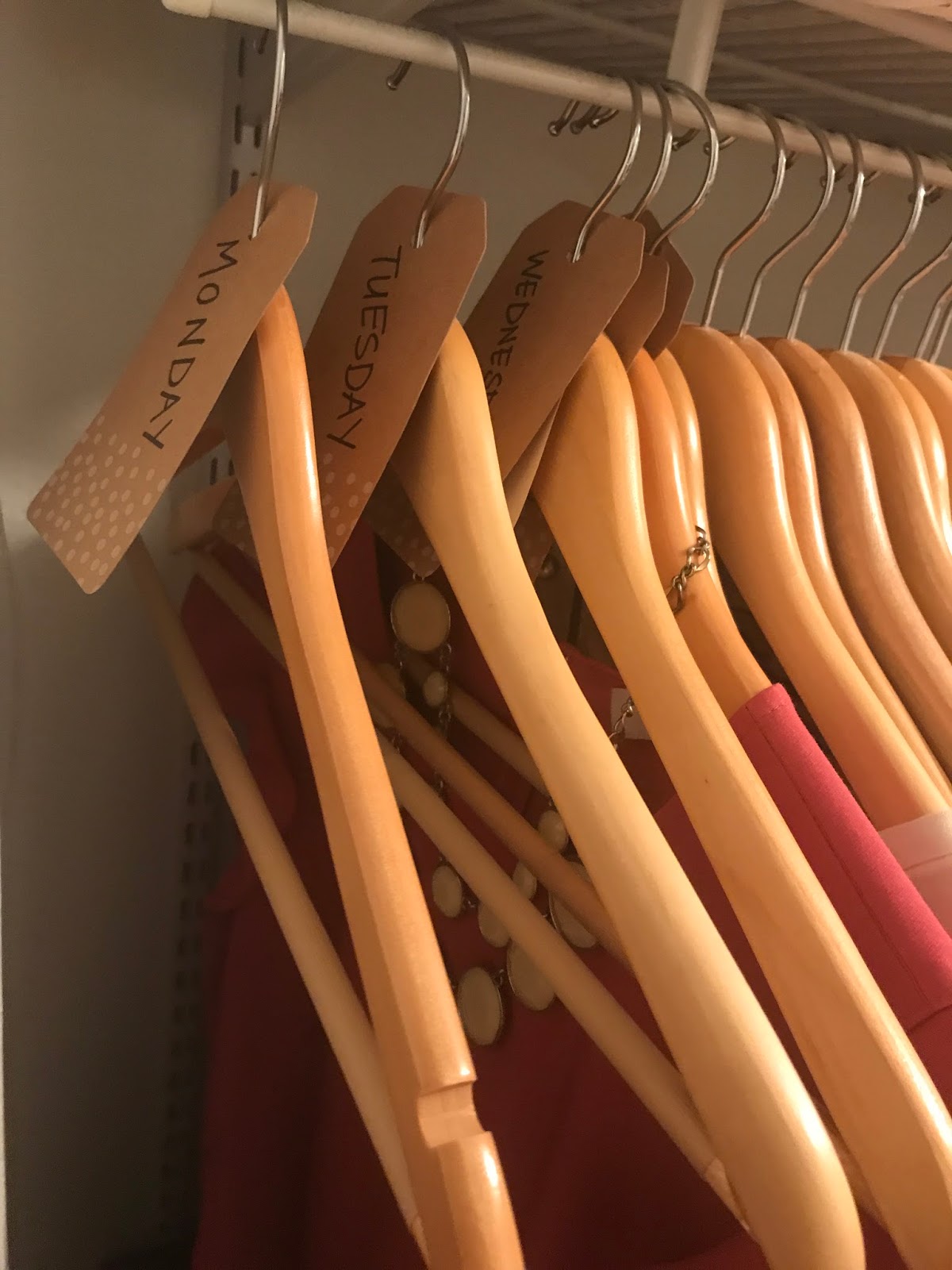

These weekly routines are so engrained in my behavior at this point that they make for a calm start to each week. It can be very challenging to get on track for the week when I'm out of town for the entire weekend. I try to grocery shop on Thursday night and plan my outfits before leaving as well so that I don't end up scrambling.
Tuesday, August 8, 2017
Slope. (AKA If at first you don't succeed, try, try again.)
I'm teaching a two week, three hour a day, summer enrichment for students who will be in Algebra with me this year. After we did a lot of "fun math" last week (WODB, Estimation 180, Would You Rather?, etc), I asked them what they'd like to work on this week. Slope was a nearly unanimous answer.
We began yesterday with Which is Steepest? They could easily discern which was the steepest but struggled to explain how they knew. Eventually we had these rectangles drawn around the line segments (normally I'd use a slope triangle, but this was what they came up).

We began yesterday with Which is Steepest? They could easily discern which was the steepest but struggled to explain how they knew. Eventually we had these rectangles drawn around the line segments (normally I'd use a slope triangle, but this was what they came up).

Our slopes were 6 and 4 (represented as 6/1 and 8/2, respectively). We tried all sorts of things like making both denominators (although they weren't written as fractions at the time) 2 and comparing the other number. Eventually, one of my girls did this fascinating math in the photo. She said she'd find the LCM of 6 and 8 (24). Then she'd figure out the numerator for the equivalent fractions. Whichever was smaller had to be steeper since it was going up the same amount in a narrower space. WHAT? I was blown away by this incredible thought process. I absolutely would never have thought about doing something like that.
Despite all of this rich discussion, there was almost a gasp of shock when I told them that steepness is basically slope. They had no idea that we'd been talking about slope the entire time. We had clearly made progress in their understanding but had a long way to go.
Today we returned to Desmos doing both Put the Point on the Line and Investigating Rates of Change. They are still struggling with interpreting steepness in a quantitative fashion. We've talked about it as a relationship between the horizontal and vertical changes at length, but something still doesn't seem to be clicking. When I ask them to reflect on how their understanding has changed, they respond positively. They don't hate slope anymore (which is a huge win in and off itself), but they shared that they don't totally get it yet.
We've established that:
-slope is independent of length (a longer line is not necessarily steeper)
-it's easier to figure out steepness if you have the line on a grid rather than a blank background
-we need to count the vertical and horizontal distances
I'm not sure where to go with them next. It's clear that we need to spend another day (maybe two) on this topic, but I can't think of anything we could do that would be different than what we've already done. I have a staircases activity that I've used in class before that I'm thinking about starting with tomorrow, but I'm sort of at a loss for how else to approach slope with them.
I've really enjoyed teaching this summer enrichment because we have the time to delve into rich tasks, but it's also become apparent quickly where students have misconceptions (and we have time to address those). I'll admit that I am somehow shocked that we've done all of these things and they still have questions. I wouldn't even have done this much in a regular classroom structure. I love how Desmos allows students to make clear what they do and don't understand so much more than a practice problem ever could.
Saturday, August 5, 2017
Goals
The theme for this week is goals, and with it being back-to-school time, that seems quite prudent. I'm going to share my goals for the next year in three ways: goals for my classroom, goals for myself professionally, and goals for myself personally.

My #1TMCThing for my classroom is to use Desmos Activity Builder in a way that is more tailored to my students' experiences. I'm certainly going to play more with the teacher pacing and pause features, but I'd also like to be able to use AB specifically for my students by creating my own. My other goal sounds secondary, but is probably one of the most important things anyone could ever try to do. I want to use the incentive from TMC to remind my students (and myself!) that they are "whatever" enough. Positivity, encouragement, celebrating successes -- whatever it takes to transform a student's perception of herself as not enough.
Professionally, I am really looking forward to engaging more with the MTBOS. I am committing to this Sunday Funday blogging challenges as a way to be more reflective about my own teaching. It is so difficult for me to make the time to do quality reflection (it seems that I'm constantly assessing ideas, strategies, and materials), this challenge may serve as the catalyst for consistent time-making. Hopefully at some point this year, I'll be ready to share my own created materials via this platform as well. Part of that stress goes back to my own trouble with being "whatever" enough. I am teaching calculus this year, a course that is new to me. I'm excited to teach a higher level content class but also eager to see how my instructional methods from Algebra transfer to an upper level course.
On a personal level, one of my goals is to give myself time this year. I'm teaching an extra class which brings with it an extra prep, and that's already causing me some stress. I'm not 100% ready to commit, but I think this may be the year that I train for a marathon. Time is going to be at a premium (it already is - and school doesn't start for two weeks!), but I think running may be a good stress buster for me. I'm also planning to go back to Connecticut next summer and may be asked to take on more of a leadership role where it would be beneficial if I was conversationally fluent in Spanish. I don't know if that's really possible in a year, but I'm committing to regular practice online and once I feel comfortable, trying to hang out with some of my bilingual friends while they are speaking only Spanish. (I'd also like to get my pilot's license, but that seems like a stretch.) I have big goals this year, but I've recently realized that life is only worth living if you take risks. Failure is part of the process, and that's a value I'd like to be able to share with my students.
Wednesday, August 2, 2017
TMC 17 Recap
Last year when I traveled to Minneapolis for my first TMC, I did so without knowing anyone. I met people through speed-dating and the newcomer's dinner but didn't feel like I forged any lasting relationships. I made a deliberate attempt to overcome my introverted nature this year by having a roommate, reaching out to people whose flights arrived at the same time as mine, and being a mentor for a first time attendee. Those three things sound fairly simple, but they are huge steps for me.
This year I was able to attend the pre-conference on Wednesday before TMC began. Seeing the new Geometry tools made me really excited to be teaching geometry again this year. I went to the "Dive into Desmos" group first thinking that I was in the intermediate/advanced category. As it turns out, I was easily able to accomplish the beginner tasks on the scavenger hunt but got stuck early on in the intermediate. I still have so much to learn! Then I went to Michael Fenton's session where we worked through the Point Collector task as students. I hadn't used that particular activity with students before, but I really enjoyed being able to see someone else model how to use a Desmos activity. I've never used teacher pacing before, but it's value was immediately obvious. As intimidating as it can be to try something new like this in class without any training, as I sat in the classroom, I was thankful to have already had experience using Desmos with a class to be able to reflect on as I watched Michael model the role of the teacher. After lunch, I went to the Activity Builder creation session. I've used a ton of different Desmos activities in my classes (my girls LOVE Desmos and ask for it!), but I have never created my own. I know where to start and the basics of the set up, but I've never followed through on it.
My morning session from TMC was the Classroom Chef with Matt Vaudrey and John Stevens. I've read their book and done almost all of the activities that we did during the sessions, but, like with Michael the day before, it was really helpful to see someone else (and in Matt's case, the person who created the activity) model the role of the teacher in a classroom. I didn't necessarily leave with new ideas, but instead with better questioning techniques and refined details about how to facilitate student learning.
I was incredibly intimidated to present at TMC. I've presented at several conferences over the past few years, and, after the first time, I haven't been nervous. David Butler made a comment at the closing session on Sunday that "everyone is worthy to present" at TMC, and while I love that sentiment, this group of rockstar teachers often leaves me feeling inferior. I actually texted a colleague those exact words just minutes before my session began.
The other afternoon sessions I attended taught me about the Active Calculus open source e-text (which looks like an amazing resource for my calc honors class), watching Chris Shore use the clothesline to make sense of numbers (another moment of watching an activity I've done before done by "the master"), and Jonathan's calculus for middle school teachers session. Although I'm familiar with calculus and teaching it for the first time this year, it was fascinating to see the concepts explained at a level that middle schoolers would be able to understand. As we try to expose more students to calculus in future years, the simplicity and elegance of conceptual calculus will certainly become more useful.
Carl Oliver's keynote on Saturday made me reflect on my own experience of the MTBOS and what my involvement has looked like. I often feel like I'm not whatever enough in this community, but I think from the feedback of my session and conversations throughout TMC, I've started to feel as though I do have useful ideas to contribute. Carl encouraged us to #PushSend. There are countless times that I have started an email, a tweet, or a blog post only to end up deleting the entire thing. Carl's charge to #PushSend will remain with me in those moments of feeling inferior and encourage me to reach out.
I left this year feeling like I can really become part of this community if I'm willing to put myself out there a bit more via both this blog and Twitter. I've decided that my #1TMCThing will come in two parts. The part for me involves engagement with the MTBOS. Posting more, responding more, pushing send. The part for me students will be Desmos Activity Builder. I'd like to create at least one of my own. After watching how Matt/John, Carl, and others integrated their own activities into tasks that had previously been done without Desmos, I realized the power of being able to create ABs tailored to my class and my students.
This year I was able to attend the pre-conference on Wednesday before TMC began. Seeing the new Geometry tools made me really excited to be teaching geometry again this year. I went to the "Dive into Desmos" group first thinking that I was in the intermediate/advanced category. As it turns out, I was easily able to accomplish the beginner tasks on the scavenger hunt but got stuck early on in the intermediate. I still have so much to learn! Then I went to Michael Fenton's session where we worked through the Point Collector task as students. I hadn't used that particular activity with students before, but I really enjoyed being able to see someone else model how to use a Desmos activity. I've never used teacher pacing before, but it's value was immediately obvious. As intimidating as it can be to try something new like this in class without any training, as I sat in the classroom, I was thankful to have already had experience using Desmos with a class to be able to reflect on as I watched Michael model the role of the teacher. After lunch, I went to the Activity Builder creation session. I've used a ton of different Desmos activities in my classes (my girls LOVE Desmos and ask for it!), but I have never created my own. I know where to start and the basics of the set up, but I've never followed through on it.
My morning session from TMC was the Classroom Chef with Matt Vaudrey and John Stevens. I've read their book and done almost all of the activities that we did during the sessions, but, like with Michael the day before, it was really helpful to see someone else (and in Matt's case, the person who created the activity) model the role of the teacher in a classroom. I didn't necessarily leave with new ideas, but instead with better questioning techniques and refined details about how to facilitate student learning.
I was incredibly intimidated to present at TMC. I've presented at several conferences over the past few years, and, after the first time, I haven't been nervous. David Butler made a comment at the closing session on Sunday that "everyone is worthy to present" at TMC, and while I love that sentiment, this group of rockstar teachers often leaves me feeling inferior. I actually texted a colleague those exact words just minutes before my session began.
The other afternoon sessions I attended taught me about the Active Calculus open source e-text (which looks like an amazing resource for my calc honors class), watching Chris Shore use the clothesline to make sense of numbers (another moment of watching an activity I've done before done by "the master"), and Jonathan's calculus for middle school teachers session. Although I'm familiar with calculus and teaching it for the first time this year, it was fascinating to see the concepts explained at a level that middle schoolers would be able to understand. As we try to expose more students to calculus in future years, the simplicity and elegance of conceptual calculus will certainly become more useful.
Carl Oliver's keynote on Saturday made me reflect on my own experience of the MTBOS and what my involvement has looked like. I often feel like I'm not whatever enough in this community, but I think from the feedback of my session and conversations throughout TMC, I've started to feel as though I do have useful ideas to contribute. Carl encouraged us to #PushSend. There are countless times that I have started an email, a tweet, or a blog post only to end up deleting the entire thing. Carl's charge to #PushSend will remain with me in those moments of feeling inferior and encourage me to reach out.
I left this year feeling like I can really become part of this community if I'm willing to put myself out there a bit more via both this blog and Twitter. I've decided that my #1TMCThing will come in two parts. The part for me involves engagement with the MTBOS. Posting more, responding more, pushing send. The part for me students will be Desmos Activity Builder. I'd like to create at least one of my own. After watching how Matt/John, Carl, and others integrated their own activities into tasks that had previously been done without Desmos, I realized the power of being able to create ABs tailored to my class and my students.
Subscribe to:
Posts (Atom)